Table of contents
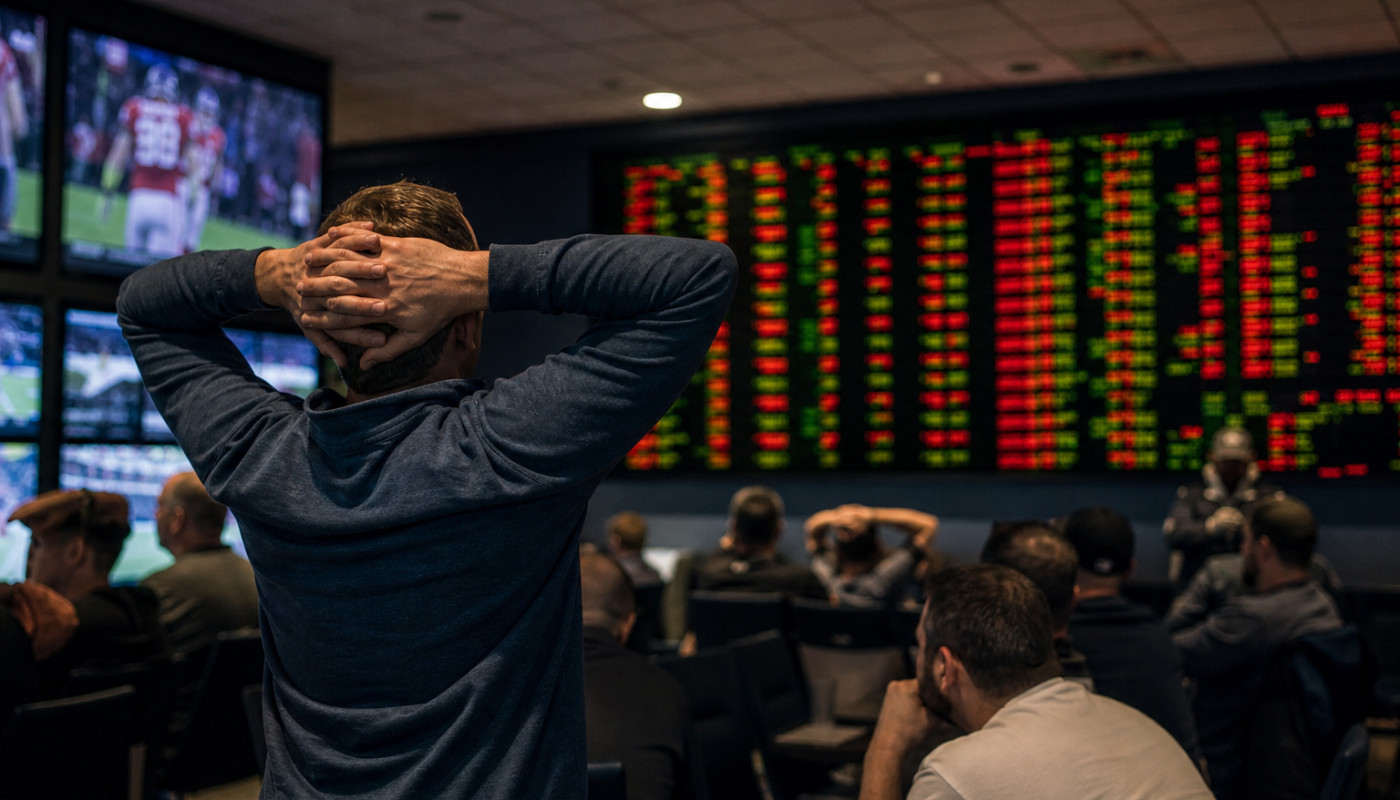
When betting odds move sharply overnight, the consequences can ripple far beyond a single wager, reshaping markets, sparking suspicion, and, at times, exposing new information before it becomes public. Sportsbooks adjust prices constantly, but the biggest overnight swings tend to arrive when liquidity is thinner, line-setting teams are less exposed to balancing action, and fresh signals hit the market in clusters. For bettors, the question is immediate and practical: was this a routine correction, or a warning flare that something meaningful has changed?
Why did the line jump overnight?
Big overnight movement usually starts with one of three forces, and the first is information. A late injury update, an illness, a change in expected minutes, a goalkeeper scratch, a travel disruption, or a weather forecast that firms up after the evening models run can all push a number, especially in sports where a single player has an outsized effect on win probability. In the NFL, quarterback availability is the obvious example, but the same logic applies in soccer when a starting keeper or a centre-back pairing changes late, and it applies in basketball when a star’s status shifts from “probable” to “out” after shootaround reports leak. Books react differently, and that difference matters: market-making sportsbooks often move first because they are shaping the price, while others follow quickly to limit arbitrage.
The second force is money, and not all money is equal. Early, sharp action, the kind that appears when limits are lower and fewer casual bettors are active, can force a bookmaker to respect the signal. This does not mean the “sharps” are always right, but it does mean the book is managing risk, and risk is shaped by who is betting, how correlated the bets are, and whether the action appears informed. In practical terms, a handful of respected bets at night can move a spread or a total more than a flood of small recreational bets the next morning, particularly in niche leagues where the handle is thinner and the line is more fragile.
The third force is the book itself correcting an opening number. Odds are not a single truth; they are an opinion constrained by liabilities, competition, and models, and openers can be wrong. Some markets are posted quickly, especially for congested schedules, and in those cases overnight trading becomes a real-time stress test. If multiple books open slightly off-market, the price can “snap” back once limit bettors take positions, and what looks like a shock to the public is, to professionals, a normal price discovery process. The key for any reader watching the move is context: did the entire market shift in the same direction, or did one shop move alone and get pulled back later?
The data behind a sudden swing
Oddsmakers and analysts often describe moves in the language of “points” and “cents,” but the most useful lens is probability. American odds can be converted into implied probability, and that conversion helps quantify what a shift actually means. For negative odds (for example, -150), implied probability equals 150/(150+100), or 60%. For positive odds (for example, +120), it is 100/(120+100), or 45.45%. Because sportsbooks build in margin, these implied probabilities are not perfect reflections of reality, but the change between them is still revealing: it shows how dramatically the market’s belief has moved.
Consider a moneyline that moves overnight from -120 to -170. The implied probability goes from 120/(120+100)=54.55% to 170/(170+100)=62.96%, a jump of about 8.4 percentage points. In a mature, liquid market, that is substantial, and it would be consistent with a meaningful player absence, a tactical shift, or a wave of respected action. Spreads tell a similar story in a different unit. In the NFL, a move of 3 points can be the difference between “coin flip” and “clear favorite,” and because of key numbers like 3 and 7, moving across those thresholds changes not only the price but the shape of the outcome distribution. Totals can also swing hard, especially when wind forecasts change or when lineup news alters pace expectations in basketball.
Timing is another piece of data that gets overlooked. Overnight, liquidity is thinner, so a smaller volume of informed money can move a line more than it would during peak hours, and some books deliberately shade overnight numbers knowing they will take sharper action. This is why experienced market watchers track “market-wide consensus” rather than one screenshot. If you see the same move across several major sportsbooks, the signal is stronger. If only one shop moves and others do not, it may be an internal risk adjustment, an error correction, or an attempt to shape betting flow.
Then there is the question of “steam,” the rapid, synchronized movement that happens when multiple books react to the same action or to each other, and that is where overnight jumps can look dramatic. Steam is not proof of a fixed outcome, it is proof of a market reacting quickly. For bettors, the practical takeaway is that the later you arrive after a big move, the more likely you are paying a tax in price, and the less likely you are capturing the value that created the move in the first place.
When movement signals real information
Does every overnight shift mean someone knows something? No, and that misconception fuels a lot of bad betting decisions. Still, there are patterns that tend to correlate with genuine information. One is when the move aligns with credible reporting, for example a beat reporter confirming a limited practice, or a club announcing a rotation. Another is when the move is coherent across related markets: a favorite’s moneyline shortens, the spread widens, and the total shifts in a direction consistent with the news. Markets are linked, and when they move together, it often indicates more than noise.
In soccer, for instance, a late goalkeeper change can move both the match odds and the total goals line, and it can also affect “both teams to score” pricing. In basketball, a star sitting can push the side and the total, but it can also reshape player prop markets because usage rate and minutes get redistributed. In combat sports, weigh-in news, injury rumors, and stylistic narratives can move prices sharply, sometimes disproportionately, and the market may correct again once broader liquidity returns. These are the moments when the overnight move can be the first visible sign of information propagating.
However, bettors should also be wary of false positives. A rumor can spark a move, and the market can later reverse when the rumor proves wrong. Likewise, books can move defensively after taking a large bet, even if that bet is not “inside information,” simply because the exposure is inconvenient at that number. The more opaque the league, the higher the risk of overreacting, and smaller competitions, youth tournaments, and lower divisions can behave differently from top-tier leagues because prices are less efficient and limits are tighter.
There is also the uncomfortable intersection between integrity concerns and sudden movement. Regulators and integrity units routinely emphasize that unusual betting patterns can be a red flag, but they also caution against assuming manipulation whenever odds move. Real-world integrity monitoring is statistical and contextual, comparing betting volumes, price trajectories, and event data, and looking for anomalies that cannot be explained by public information. A sharp overnight swing can be a clue, but it is rarely a verdict by itself, and responsible reporting tends to separate “market movement” from “match-fixing” unless there is corroboration.
How bettors respond without chasing
The most common mistake after an overnight shift is chasing the move, betting simply because the line moved, and ignoring whether any value remains. Odds movement is backward-looking; it tells you what the market did, not what it will do next. A disciplined response starts with a question: what changed, and how does that change compare to the size of the move? If a minor squad rotation produces a major swing, the market may be overreacting. If a major injury produces only a small move, the market may be waiting for confirmation, or it may be pricing in an expected replacement. Either way, the bettor’s job is not to imitate the market but to evaluate whether the current price is efficient.
Line shopping becomes more important when markets move quickly because different books adjust at different speeds, and those gaps create temporary value. Even a small difference, a few cents on a moneyline or half a point on a spread, can matter over time, especially for high-volume bettors. Managing timing helps too. If you routinely bet early, you will sometimes beat the closing line and sometimes be wrong, but you will at least have a process. If you routinely bet late after big overnight movement, you are more likely to buy a worse price. Professionals often talk about “closing line value” as a proxy for long-run edge, and while it is not perfect, it is a useful discipline: it encourages bettors to focus on price, not on narratives.
It also helps to understand how information travels, and why certain kinds of odds shifts have predictable dynamics. Injury news tends to move quickly, then stabilize. Weather can cause multiple waves, especially when forecasts update. Tactical news, like a coach signaling a different approach, may be over-weighted at first, then corrected. And in some markets, particularly player props, the edge can disappear in minutes because models update and books copy each other. If you are trying to follow these movements, you need reliable sources, and you need to be honest about whether you are early enough to benefit.
For readers who track betting trends as part of broader sports analysis, not just wagering, overnight movement can still be informative because it reflects collective assessment. Used carefully, it can help frame pregame stories: who is unexpectedly favored, which matchups are being re-rated, and where uncertainty is highest. In that sense, odds are a form of market journalism, but they are also a business instrument, and treating them as pure truth leads to bad inference. If you want a deeper primer on market behavior and how different regions price events, one reference point is a profile about his work, which offers additional context on how pricing perspectives can vary.
Before placing a bet, set guardrails
Overnight swings reward preparation, not impulse, so decide your budget, compare several sportsbooks, and avoid staking more simply because a move looks “smart.” If you are booking travel to attend a game, lock refundable options early and re-check schedules in the morning. In some countries, consumer programs and local grants support problem-gambling prevention; if betting stops being entertainment, use those resources.
Similar

How To Choose The Right Platform For Your Betting Needs?

Exploring The Rise Of Non-Regulatory Sports Betting Platforms

Mobile betting revolution comparing the top apps for seamless gambling on the go

Exploring The Benefits Of Loyalty Programs In Online Sports Betting

How To Safely Access And Use Global Sports Betting Sites Without A VPN

Maximizing Winnings In Street Style Penalty Shootout Games

Comparative Analysis Of Sports Betting Trends Across English-speaking African Nations
